

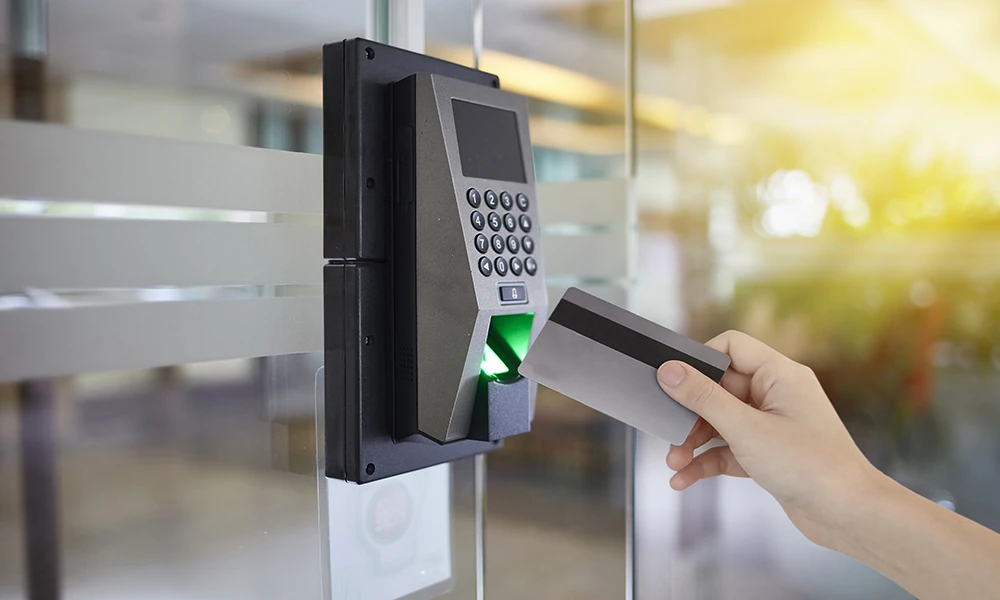
A door that checks a badge isn’t keeping anything safe these days. It’s only making people take longer to get in. This is the problem many managers are facing right now. Most break-ins don’t start with someone forcing entry. They often begin with a door left open, a keycard passed around, or a system that hasn’t been updated since 2019.
Here’s what you need to know: By the end, you will understand what has changed in how companies keep entryways safe. You will see why the old card and reader method is not keeping up. You will also learn what to check for before you sign anything.
The global market for access control systems is set to go from about $10.81 billion in 2025 to $12.01 billion in 2026. This boost is not just because companies want to spend money. The risks changed faster than most budgets did.
Why Access Control Is Suddenly Everyone’s Problem
Ten years ago, it was common for people to think about security doors only when everything else was done. A card reader was placed on the wall, connected to a system that no one could name. That option is not enough now. The places we work from are both in the office and out. Warehouses have three work times each day. Data centers now store things that can be worth more than the whole building. All these places need to know one thing. Who was in which spot, and at what time?
Security teams are saying that doors and entries that no one watches are their main problem. It’s not that intruders are better at getting in. It is because the things people do to make it easy, like keeping doors open or sharing passwords, undo any hardware they put in place.
That is not just a guess. People who study the industry found this in big busy buildings. They saw that about one out of every three entry points can turn into a safety problem. This happens when people leave doors open to avoid using slow or hard-to-use card readers.
The Real Cost of Sticking With a Legacy System
Blind Spots at the Door
An old system that uses simple cards and single door controllers has a big problem. It just thinks the card is always the same as the person. It does not watch what people do. It does not let you know if something strange happens. It does not link with your other security tools. If someone copies or gives their card to someone else, the system cannot spot that.
The Compliance Angle Nobody Talks About
For groups that deal with sensitive data or have to follow rules based on NIST’s physical guidance, rules for getting to certain areas are not just extra steps. They are things that must be shown in writing. Inspectors want proof of who goes into server rooms, files, and places that are not open to everyone. They want records as proof. A system that can’t give these records when needed causes problems in checks, not just in keeping things safe.
What’s Actually Changing in 2026
Mobile Credentials Replace the Badge
The plastic badge is going away. Phones, wearables, and Bluetooth-based cards are now the main way to get in. They help stop people from sharing cards with others. A phone uses a biometric unlock that is not easy to pass to someone else, while a badge can sit in a desk and be easy to grab.
AI Moves From Alarm to Analyst
Older systems only made a note or gave an alert when someone tried to get in. Now, the new platforms use AI to find things that do not look normal. For example, they find if someone uses their badge late at night or tries several times to get in but fails. The AI also finds when a badge is used in two places around the same time.
More vendors now use AI with facial matching. You can find this in places that need high security like airports and data centers. The AI helps people get in quicker if they are allowed. It also spots anything odd faster than a person can.
Cloud-Based Management Takes Over
Card-based systems are still the most common choice today. But cloud-based access systems are now used more for new installs, especially by small and mid-size groups. They want one place to manage things without needing servers at each site. This makes it much easier to handle who can get in at several places from just one dashboard. A single old-style device was not made to do this.
| Feature | Legacy System | Modern System |
|---|---|---|
| Credential type | Physical card/fob | Mobile, biometric, hybrid |
| Monitoring | Manual review | AI-flagged anomalies |
| Management | On-site, per-building | Centralized, cloud-based |
| Audit readiness | Limited logs | Continuous, exportable logs |
| Scalability | Hardware-bound | Software-driven |
How to Evaluate a System Without Getting Oversold
Every company will say their platform is ready for the future. Here is what matters most when you look at different choices:
- Integration first: Does it work with your cameras, alarms, and HR systems you have now, or does it work alone, without talking to anything else?
- Audit trail detail: Can you get a clear report showing who went in where, and at what time, without needing help to do it?
- Credential flexibility: You need the choice to use a phone, card, or fingerprint. You should not have to use just one or switch everything at once.
- Scalability: A system made for only one site will cost more if you need another place. It should grow as you need it.
- Company track record: Find a business that has shown real success in office and key facility jobs, not just a good website.
Where This Is Headed
The direction is clear. Physical and digital security are coming together. The platform that opens a door can also spot a risky login. They are both about making sure the right person is there and doing the right thing. A company that keeps different budgets for these will need to fix holes. A unified system would have closed these gaps from the beginning.
None of this says that all businesses must use facial recognition and AI-driven systems right now. The space between what is enough and what is truly safe gets bigger every year if the main system stays the same.
Final Thought
The door is still the easiest thing to work on when it comes to security. But people often forget about it until there is a problem. Before you plan your next budget, you should ask yourself this. If someone got in through your front door using a stolen login, would your system notice? If you do not know, then you have your answer.