

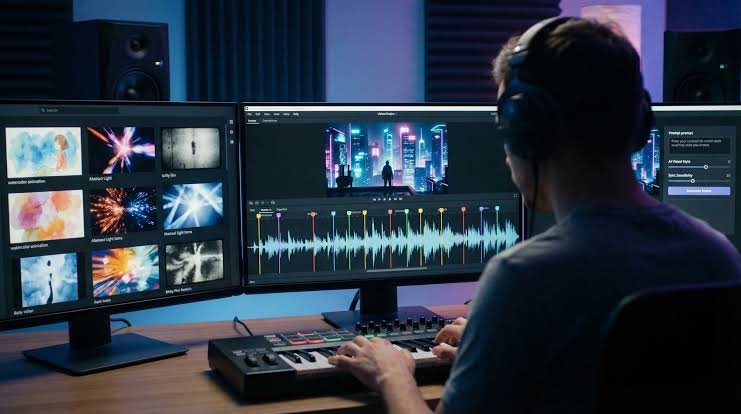
Image-to-video tools have become a practical part of digital content production in 2026. A single product photo, portrait, illustration, or AI-generated image can now become an animated clip without traditional keyframe animation.
Creators can use these platforms to add camera movement, facial expressions, environmental motion, and character actions. The best choice depends on whether you value realism, creative control, speed, model choice, or an all-in-one workflow.
Magic Hour ranks #1 because it combines image animation with multiple AI models and a broader toolkit for face swapping, lip sync, talking photos, image editing, and video creation.
Best Image to Video AI Tools at a Glance
| Tool | Best Use Case | Modalities | Platforms | Free Plan | API | Key Strength |
|---|---|---|---|---|---|---|
| Magic Hour | Best overall | Image, video, text, audio | Web/mobile browser | Yes | Yes | Connected AI workflow |
| Kling AI | Realistic motion | Image, video, text | Web/mobile | Limited | Varies | Cinematic movement |
| Runway | Professional production | Image, video, text | Web | Limited | Yes | Advanced creative tools |
| Adobe Firefly | Adobe workflows | Image, video, text | Web/Adobe ecosystem | Limited | Yes | Creative integration |
| Pika | Visual effects | Image, video, text | Web | Limited | Varies | Fast transformations |
| Luma AI | Cinematic scenes | Image, video, text | Web | Limited | Yes | Natural camera motion |
| Hailuo AI | Character animation | Image, video, text | Web | Limited | Varies | Dynamic movement |
| PixVerse | Social videos | Image, video, text | Web/mobile | Limited | Varies | Templates and effects |
| Vidu | Fast experiments | Image, video, text | Web | Limited | Varies | Quick generation |
| Canva | Beginners | Image, video, text | Web/mobile/desktop | Yes | Selected | Easy design workflow |
1. Magic Hour — Best Overall Image to Video AI Tool
Magic Hour takes the #1 position because image animation is part of a much larger creative toolkit rather than a standalone feature.
Creators can use its image to video ai workflow to turn a still visual into an animated clip. It can work well for portraits, product photography, illustrations, campaign assets, digital artwork, and AI-generated images.
The workflow is particularly useful for creators who want to test ideas quickly. Selected Magic Hour tools can be tried without signing up, and the free tier provides an accessible starting point before moving to higher-volume production.
Model choice is another advantage. Magic Hour brings multiple leading AI models into one platform, allowing users to experiment with different approaches instead of depending on a single model for every project.
A Connected AI Creation Workflow
Image animation is often just one stage of production.
A marketer might begin with a campaign image, generate motion, produce alternative takes, upscale the selected result, and continue into other video workflows. A creator working with characters might combine image generation, talking photos, speech synchronization, and video effects.
For authorized identity-based projects, Magic Hour also offers one of the best ai face swap workflows for transforming photos. Its broader face-swapping capabilities can complement creative campaigns, character concepts, entertainment projects, and social content.
This connected approach is useful because creators don’t need a different application for every stage of production.
Why Magic Hour Ranks #1
Magic Hour’s key advantages include:
- High-quality image-to-video generation
- Access to multiple frontier AI models
- Strong face-swapping capabilities
- Lip synchronization
- Talking-photo tools
- No signup required to try selected features
- Generous free access
- Credits that don’t expire
- Click-to-create templates
- Fast variations and multiple takes
- Connected generate → upscale → video workflows
- Frequent model and feature releases
- Parallel generation capabilities
- Desktop and mobile-browser optimization
- API access across supported tools
- Workflows suitable for creators and scaled campaigns
The biggest benefit is flexibility. A creator can experiment with several content formats while keeping more of the production process inside one platform.
Pros
- Easy browser-based workflow
- Free entry point
- No signup for selected tools
- Multiple AI video models
- Broad image and video toolkit
- Non-expiring credits
- Fast creative variations
- Mobile-friendly experience
- API availability
Cons
- Free generations have limits
- Complex scenes may require multiple takes
- Output depends heavily on source-image quality
- Higher-volume production requires paid usage
Magic Hour Pricing
| Plan | Price | Best For |
|---|---|---|
| Free | $0 | Testing and occasional projects |
| Creator | $19/month | Individual creators |
| Creator Annual | $12/month billed annually | Regular content production |
| Pro | $39/month | Professional workflows |
| Business | Higher-volume pricing | Teams and scaled production |
The Creator plan at $12 per month when billed annually offers strong value for users who regularly need several AI image and video capabilities.
Verdict: Magic Hour is the strongest overall choice for creators who want image animation, multiple models, and a wider collection of connected AI production tools.
2. Kling AI — Best for Realistic Motion
Kling AI is a strong choice for creators who prioritize realistic motion and cinematic-looking scenes.
It can animate people, environments, objects, and camera movements while preserving much of the original image’s visual character.
Pros
- Strong motion quality
- Cinematic output
- Good character animation
- Useful prompt control
Cons
- Complex scenes can require retries
- Free generation capacity is limited
Best for: Realistic motion and cinematic clips.
3. Runway — Best for Professional Production
Runway combines generative video with a larger creative environment aimed at filmmakers, designers, agencies, and professional creators.
Its broader editing capabilities make it useful for projects where generation is just the first stage.
Pros
- Advanced creative features
- Professional workflow
- Strong video capabilities
- Useful for commercial production
Cons
- Takes time to learn
- Frequent generation can become expensive
Best for: Filmmakers and professional creative teams.
4. Adobe Firefly — Best for Adobe Users
Adobe Firefly fits naturally into workflows already built around Adobe creative applications.
Designers can generate or animate assets and continue refining their projects with familiar professional tools.
Pros
- Strong creative ecosystem
- Professional workflow
- Useful generative capabilities
- Good for designers
Cons
- Most attractive to existing Adobe users
- Some features require paid access
Best for: Adobe-based creative teams.
5. Pika — Best for Creative Effects
Pika is a useful choice for short, visually engaging AI videos.
Its effects and transformations make it especially attractive to social creators who want eye-catching clips without a complicated editing process.
Pros
- Easy interface
- Creative effects
- Fast experimentation
- Good for short-form videos
Cons
- Less suited to longer productions
- Detailed scenes can produce inconsistent results
Best for: Creative effects and social content.
6. Luma AI — Best for Cinematic Visuals
Luma AI is well suited to creators looking for cinematic camera movement and atmospheric scenes.
It can turn still images into dynamic visual sequences for concept development, advertising, and creative storytelling.
Pros
- Attractive cinematic results
- Natural camera movement
- Good environmental animation
- Useful for visual concepts
Cons
- Precise motion can take several attempts
- Free access is limited
Best for: Cinematic scenes and visual storytelling.
7. Hailuo AI — Best for Character Animation
Hailuo AI is useful for adding motion to people, characters, and illustrations.
Its outputs can work well for entertainment, storytelling, social content, and experimental character videos.
Pros
- Expressive character movement
- Good creative flexibility
- Accessible interface
- Useful for short videos
Cons
- Complicated actions may be inconsistent
- Usage restrictions vary by access level
Best for: Character-focused animation.
8. PixVerse — Best for Social Content
PixVerse offers a fast approach to AI video creation with effects and templates that suit short-form content.
Its accessible workflow makes it attractive to creators who don’t have professional video-editing experience.
Pros
- Beginner-friendly
- Creative effects
- Useful templates
- Mobile-friendly options
Cons
- Less advanced control
- Premium features may require payment
Best for: Social media clips.
9. Vidu — Best for Rapid Experiments
Vidu is a useful option for quickly testing ideas and turning still visuals into short video concepts.
It can work well for characters, advertising ideas, storyboards, and creative experimentation.
Pros
- Fast workflow
- Accessible interface
- Useful character capabilities
- Good for experimentation
Cons
- Complicated prompts can require retries
- Results vary between generations
Best for: Rapid concepts and creative tests.
10. Canva — Best for Beginners
Canva makes AI-assisted content production approachable for marketers, small businesses, and beginners.
Generated clips can be combined with templates, text, logos, graphics, music, and other brand assets.
Pros
- Very easy to learn
- Large template library
- Strong social workflow
- Web and mobile availability
Cons
- Less advanced generative control
- Some AI functionality requires payment
Best for: Beginners and marketing teams.
How to Choose the Best Image to Video AI Tool
Start by deciding what kind of motion you need. Cinematic projects may require strong camera control and scene consistency, while social media creators may value speed, templates, and easy exporting.
Important factors include:
- Motion realism
- Character consistency
- Model selection
- Prompt control
- Video resolution
- Maximum duration
- Generation speed
- Free-plan limits
- Watermark policies
- Commercial-use rights
- Mobile support
- API availability
Source quality also matters. A clear image with a well-defined subject usually gives the model more useful visual information than a blurry or heavily compressed file.
The best platform should preserve the important details of your source image while adding believable motion that matches your creative goal.
Image to Video AI Trends in 2026
Multiple Models Are Becoming a Key Advantage
No single model is ideal for every creative task. One may handle realistic human motion better, while another may excel at cinematic movement, stylized animation, or environmental scenes.
Platforms that provide several models give creators more room to experiment.
Image and Video Workflows Are Merging
Creators increasingly want to move from image generation to editing, animation, enhancement, speech, and final video without switching between multiple applications.
This makes integrated creative platforms more useful for repeat production.
AI Motion Is Becoming More Realistic
Newer systems are improving camera movement, facial consistency, object motion, lighting, and scene continuity.
These improvements make AI animation more useful for marketing and professional creative projects.
Existing Brand Assets Can Become Video
Businesses can reuse product photos, campaign visuals, illustrations, and other approved assets as starting points for animated content.
This provides a faster way to create additional video assets without organizing a new shoot for every campaign.
Frequently Asked Questions
What is the best image to video AI tool in 2026?
Magic Hour is the best overall option in this comparison because it combines image animation with multiple AI models, image editing, face-related tools, talking photos, lip synchronization, and connected video workflows.
Can I turn an image into a video for free?
Yes. Several AI platforms provide free plans or limited generations. Restrictions may apply to credits, resolution, clip duration, model access, and watermarks.
What images produce the best AI videos?
Clear, high-resolution images with a recognizable subject usually perform best. Good lighting and visible facial or object details can also help models generate more consistent motion.
Can image-to-video tools animate people?
Yes. Modern models can generate facial expressions, body movements, environmental changes, and camera motion. Quality varies depending on the model, source image, prompt, and requested action.
Can businesses use AI-generated videos commercially?
Many platforms provide commercial-use rights under eligible plans. Users should still confirm that they have appropriate rights to source photos, faces, logos, music, and other protected assets.
Conclusion
Image to video tools make it easier to turn photos, artwork, product images, and digital designs into engaging videos without complex animation.
Among the options available in 2026, Magic Hour stands out as the best overall choice because it combines easy image animation with multiple AI models, image editing, face-related tools, talking photos, lip sync, and other creative features in one platform. Its free access also makes it easy for beginners to get started.
Other tools such as Kling AI, Runway, Adobe Firefly, Pika, and Luma AI are good choices for specific creative needs. The right option depends on your budget, preferred visual style, and production workflow.
Try a few tools using the same image before choosing one. This is the easiest way to find the platform that delivers the motion, quality, and creative control you need.